

GQ MIDDLE EAST X OMAR MARMOUSH
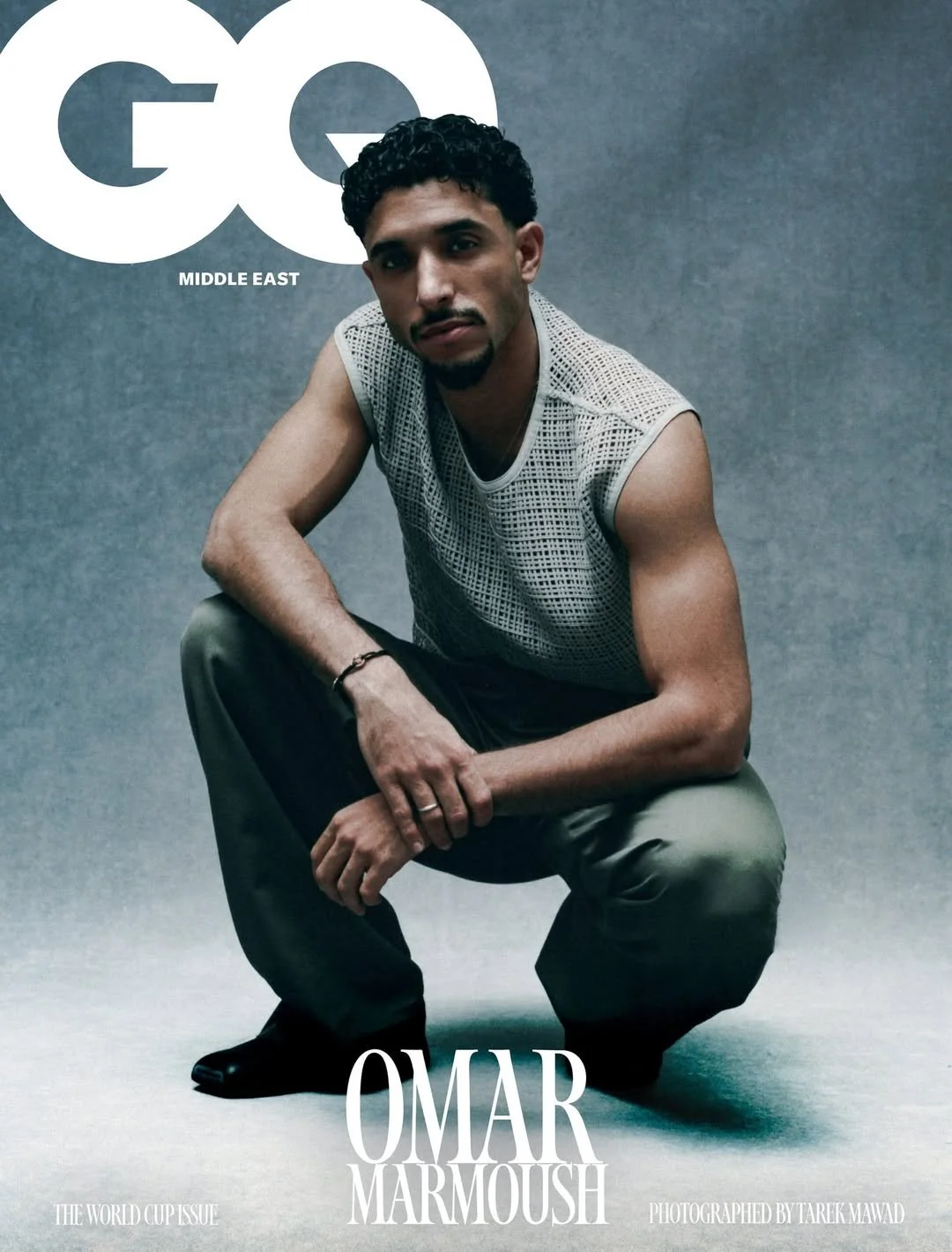
Grooming by Terri Grisdale
The sun is shining gloriously in Manchester. It’s the first time in what feels like, well, forever. Omar Marmoush, fresh from training and sporting a crisp, grey sweater, lifts his head towards the sky in praise – he’s only half-joking. Such moments rarely pass without thanks in the northwest of England. You never really know when the next one’s coming.
There’s little want for bright spells when it comes to his club, Manchester City, of course. Since the 2008 takeover by Abu Dhabi United Group there have been eight Premier League titles, four FA Cups, nine League Cups, one Champions League, one UEFA Super Cup, and one Fifa Club World Cup. Less a warm spell and more a heatwave, really – one that Europe’s elite has sweated on for the best part of two decades.
Even so, when the Egyptian striker arrived at the club in January 2025, there was an element of whispered transition about the place. Questions swirled regarding the future of epochal manager Pep Guardiola (who recently did confirm a departure from the club), while the likes of Kyle Walker and Kevin De Bruyne – integral fixtures in a side that had won four English top-flight titles in a row – left the team. The season would end as the first without a trophy in almost eight years, the first since Guardiola’s debut season, in fact.
Marmoush was part of a mid-season injection of fresh blood, one of four big-money signings – along with Abdukodir Khusanov, Vitor Reis, and Nico González – that, given time and fair opportunity, were there to help the dynasty power up. Part of an occasional, yet, essential changing of the guard. No pressure, then. Literally, as it happens. Marmoush came to play.
“As a kid you dream of being at a club like this,” says the 27-year-old, showing no visible signs of peril from the weight of expectation. “I trained hard to get here, you know? My whole career led up to this point – to compete and play with the best players in the world, trying to win titles. So, when the move came I knew I was ready.”
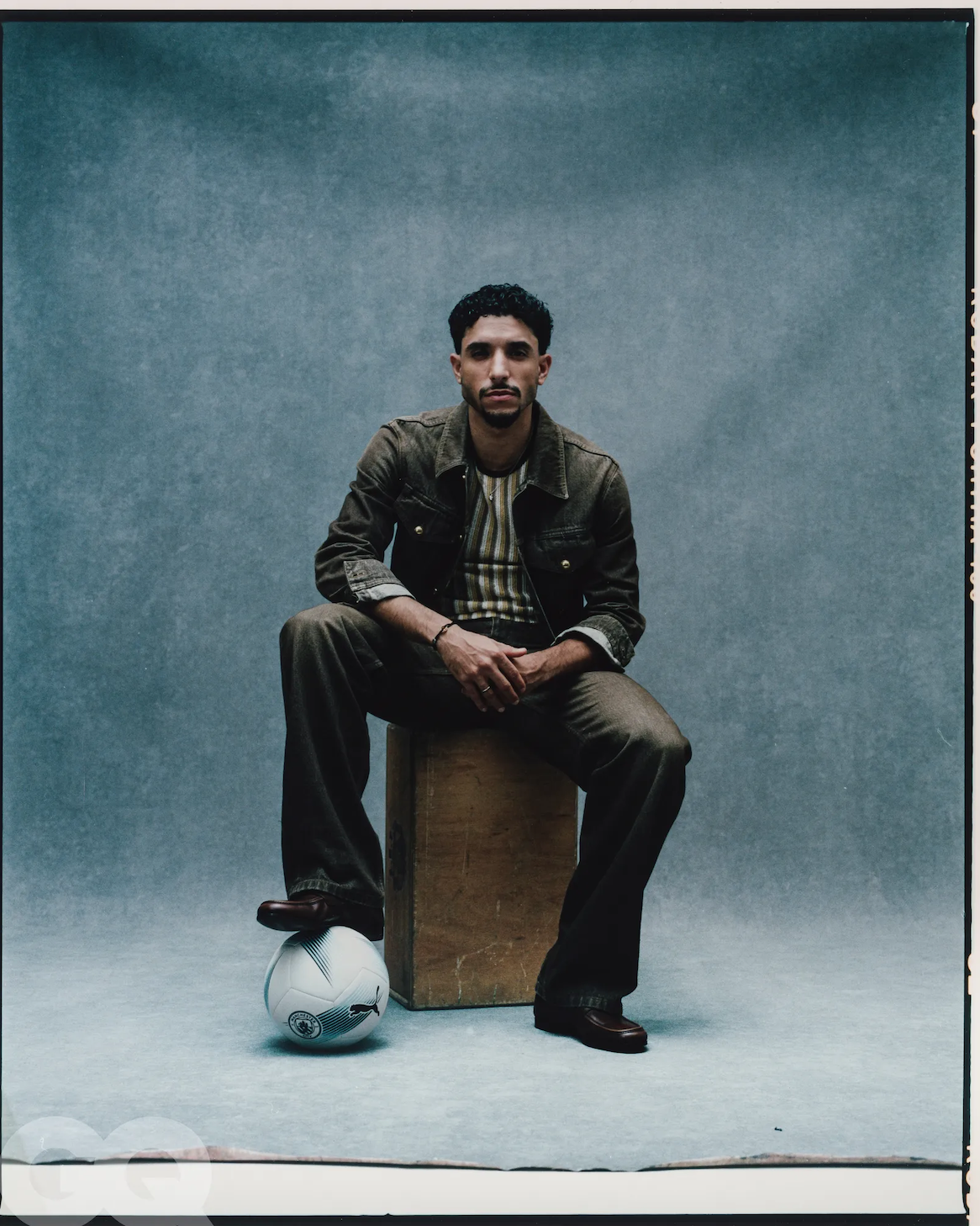
That quiet assurance feels typical for the man from Cairo. It’s not arrogance or cockiness. It’s confidence. The type developed over time on a route to the top that feels more old school than most. Marmoush wasn’t a big-club starboy, groomed for glory by the age of eight and armed with TikTok reels that made him the talk of a fanbase. Far from it. After starting out at local side Wadi Degla, the rapid forward moved away from home when he was just 18. Egypt to Germany – not just cities or countries but continents. He spent time roughing it in European second strings and on loan spells, making gradual progress. For him, football was the only option.
“My parents told me that I always had a ball with me when I was growing up. Even when I was a baby,” he laughs. “Most kids wanted to watch TV but, as long as I had a ball, I was happy.”
He’s not exactly a football obsessive, it should be said. He didn’t have a team when he was growing up (“I would rather play than watch”), and he wasn’t the type to run around with a football shirt on his back, either (“I wore the shirt of the team I played for”). He’ll watch on TV occasionally and, of course, caught the Champions League quarter-final tie between Bayern Munich and Real Madrid. Essential sadomasochistic viewing of the team that vanquished his own from Europe’s biggest club competition in this season’s previous round.
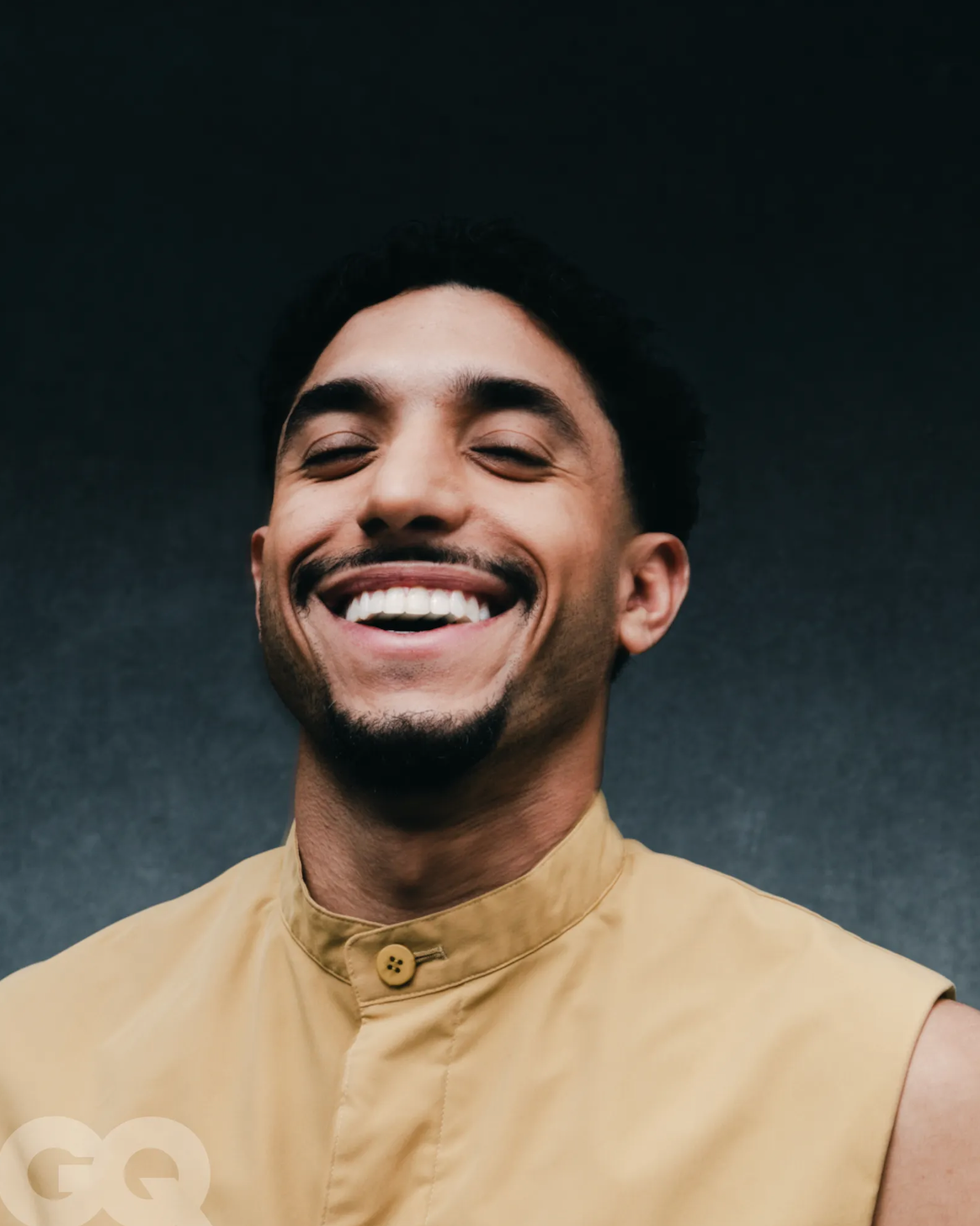
“I try to disconnect a little, but I do check some matches,” he says. “Watching [Madrid] the other night was the worst. Just sitting at home knowing that we could have been there was a terrible feeling. But it’s part of the game. You keep learning, and keep moving forward.”
When he was breaking through at Wadi Degla, Marmoush knew that he would have to leave Egypt if he wanted a career at the highest level – keep learning, keep moving forward.
“I was waiting to turn 18 to leave,” he says. “I’d played in the first team already but it was clear, when I started to get older, that I would have to go elsewhere to achieve my dreams. I got an offer from [German side] Wolfsburg and spent two weeks there training. It was a big move… a huge move, I was very young, but I didn’t really think about whether it would be difficult or not. I just went.”
Sometime in the late 1980s, a myth grew around the former Liverpool striker Ian Rush who, after signing for the Italian side Juventus in 1986, subsequently returned home rather sharply after just one year away from the UK. When asked about the experience, football folklore stated the Welshman replied, “I couldn’t settle in Italy… it was like living in a foreign country.” Rush later denied ever saying it, but the story has endured regardless.
Being homesick wasn’t really an issue for Marmoush, at least when he was playing. After all, his parents had travelled with him when he first left (“They brought Egypt with them!”), and he was fully focused on assimilation. “I wanted to learn the language quickly. It helped me get to know my teammates and understand their culture, how they act, how they speak, and what they demand on and off the pitch. It was good that I wasn’t shy. I would just try and speak [German] with them. I got lots of things wrong at first, and my teammates would laugh at me, but I think they appreciated the effort. Now I’m fluent.”
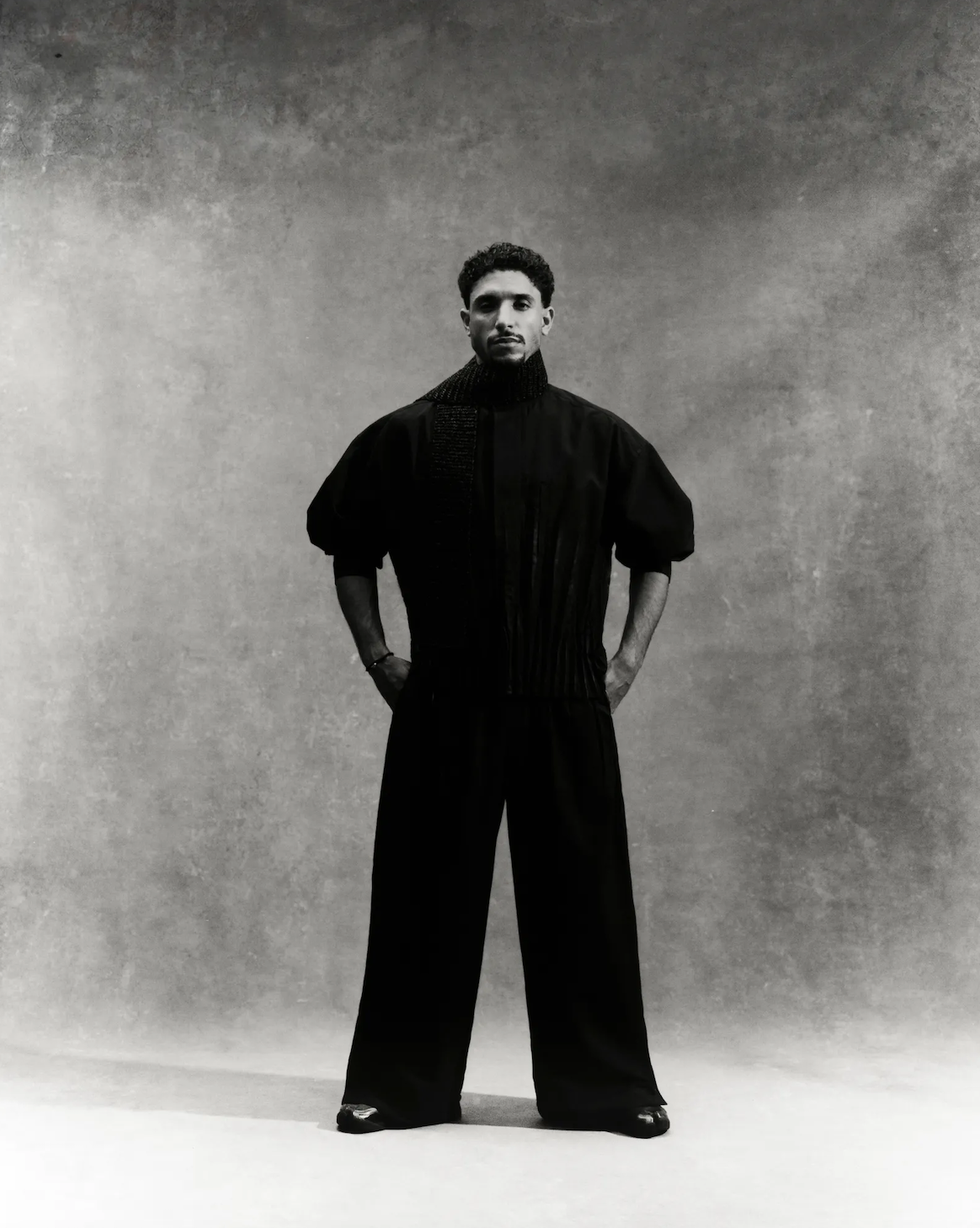
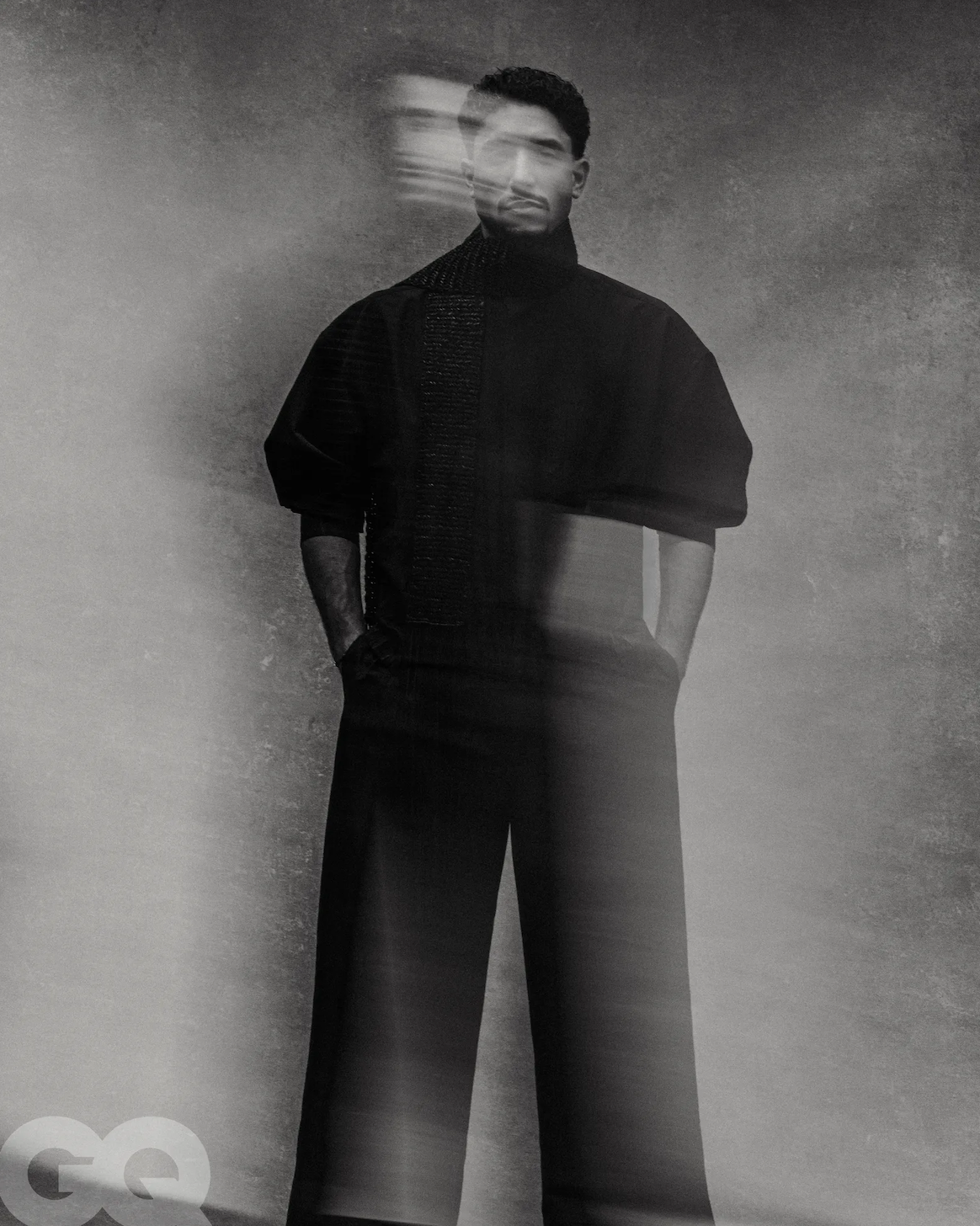
Around the time Manchester City got googly-eyed for the Egyptian, Marmoush made up one-half of a top young striking duo in Germany. Both he and the Frenchman Hugo Ekitike got there the hard way. Ekitike’s big move from Stade de Reims to PSG had failed to ignite, while Marmoush had signed a professional contract with Wolfsburg, and had loan spells first with St Pauli in the second tier, and then at Stuttgart in the Bundesliga. His form had been steady, with moments of the spectacular knitting things together. He eventually joined Eintracht Frankfurt on a free transfer and suddenly everything clicked. A debut season saw 16 goals in 37 games – along with alleged interest from the likes of Liverpool, Arsenal, and Newcastle United – before a second season took him into the stratosphere. His partnership with Ekitike, himself in his first full season with the Germans, was defined by dazzling pace and ruthless finishing, by movement and menace. By Christmas Marmoush had hit 15 goals in 17 games, and was second in the goalscoring charts only to Harry Kane. By January he was sat on a plane and heading to Manchester.
“It wasn’t just that one or two years [that secured the transfer],” he points out. “It was much longer. You build confidence over time, you learn your worth. So, when the move happened I knew I was supposed to be there. But still, the change was weird. One day you’re at one club, the next day somewhere completely different with a different atmosphere, and already playing. January transfers always go fast. Not like in the summer when you have a pre-season to acclimatise. Straight away I was playing in a new league, and with a different intensity. But I was confident.”
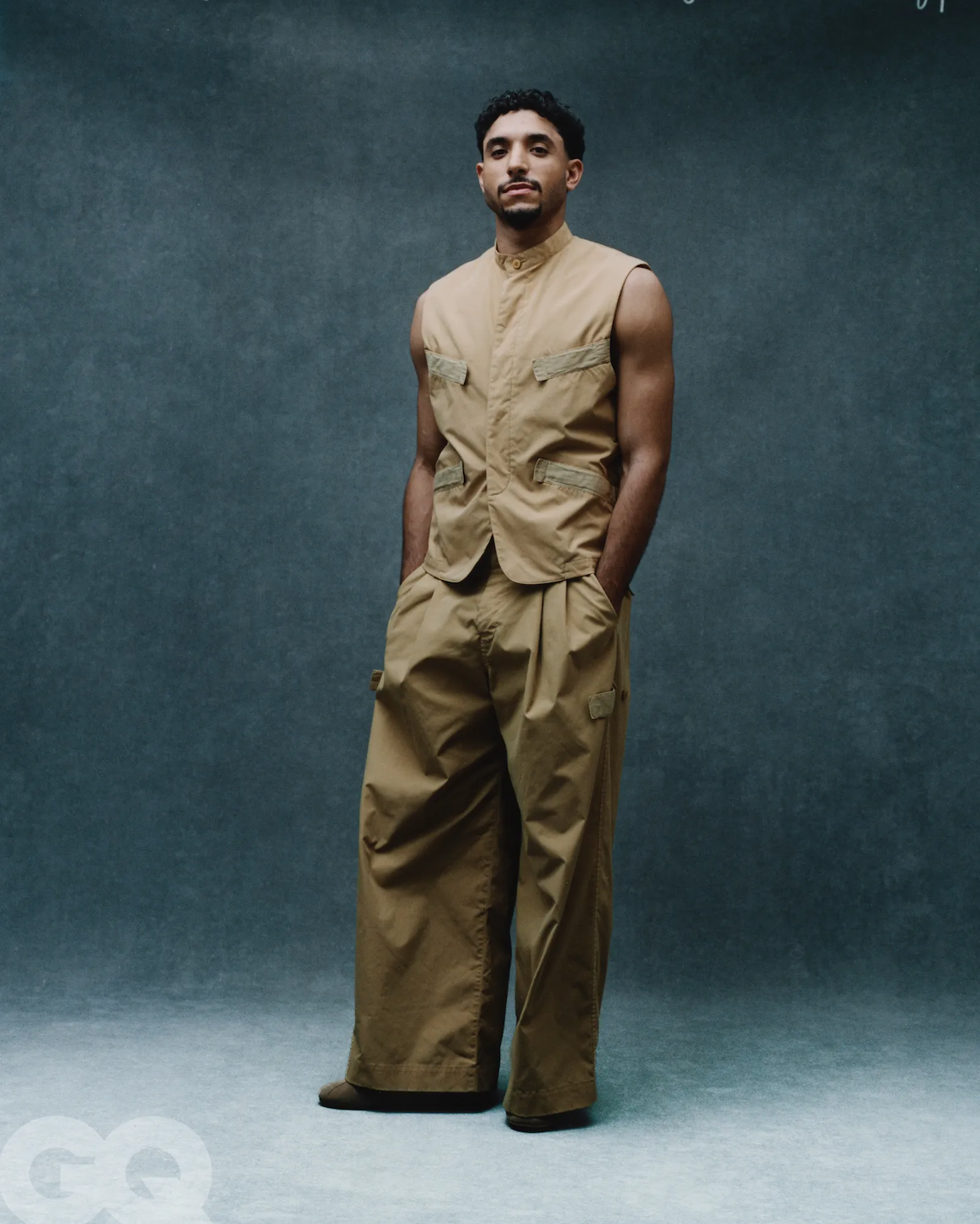
Just over a full season in and you feel that Marmoush is only getting started at The Etihad. He loves life at City, and in the Premier League. “It has fulfilled all my expectations and more. I would watch it a lot before I arrived, but to play here is different. It’s way more intense in real life.” There have been big moments, too, glistening signs of golden promise, like his Premier League goal of the season against Bournemouth last year – a run and viciously dipping shot into the top corner from around 30 yards.
“He’s a special player,” said Guardiola of Marmoush following a 5-2 win over Crystal Palace in 2025. “He’s not old, not young, and still has a margin to improve,” he continued, after the Egyptian scored the equaliser in a game where his team had, at one point, actually been trailing 2-0.
But acclimatisation takes time, and playing at a club such as Manchester City comes with a high element of jeopardy with regards to a starting place in the side. At Frankfurt, there’s an argument to say that Marmoush could have been forgiven the occasional off day and still been one of the first names on the team sheet the following week. But when a squad is stocked full of stars, decisions on who play are made on the finest of margins. Especially when you’re toiling through the longest football season in Europe.
It’s become dog-eared now, of course, the phrase that football is a squad game. But it’s a truth self-evident for teams such as Manchester City, who generally play three games per week at the highest level for the majority of the season. In 2024/25 that amounted to 60 games, which meant the club needed to safeguard against injury, suspension, dips in form, physical overload, as well as having a tactical flexibility to consistently hunt for trophies across four competitions. That comes in the form of regular squad rotation. But that means frustration for those left out. When we talk about the fact that seven of his 14 goals in England have come against Newcastle United, he insists that there is actually no Geordie vendetta, but rather that he was simply on the pitch from the first whistle.
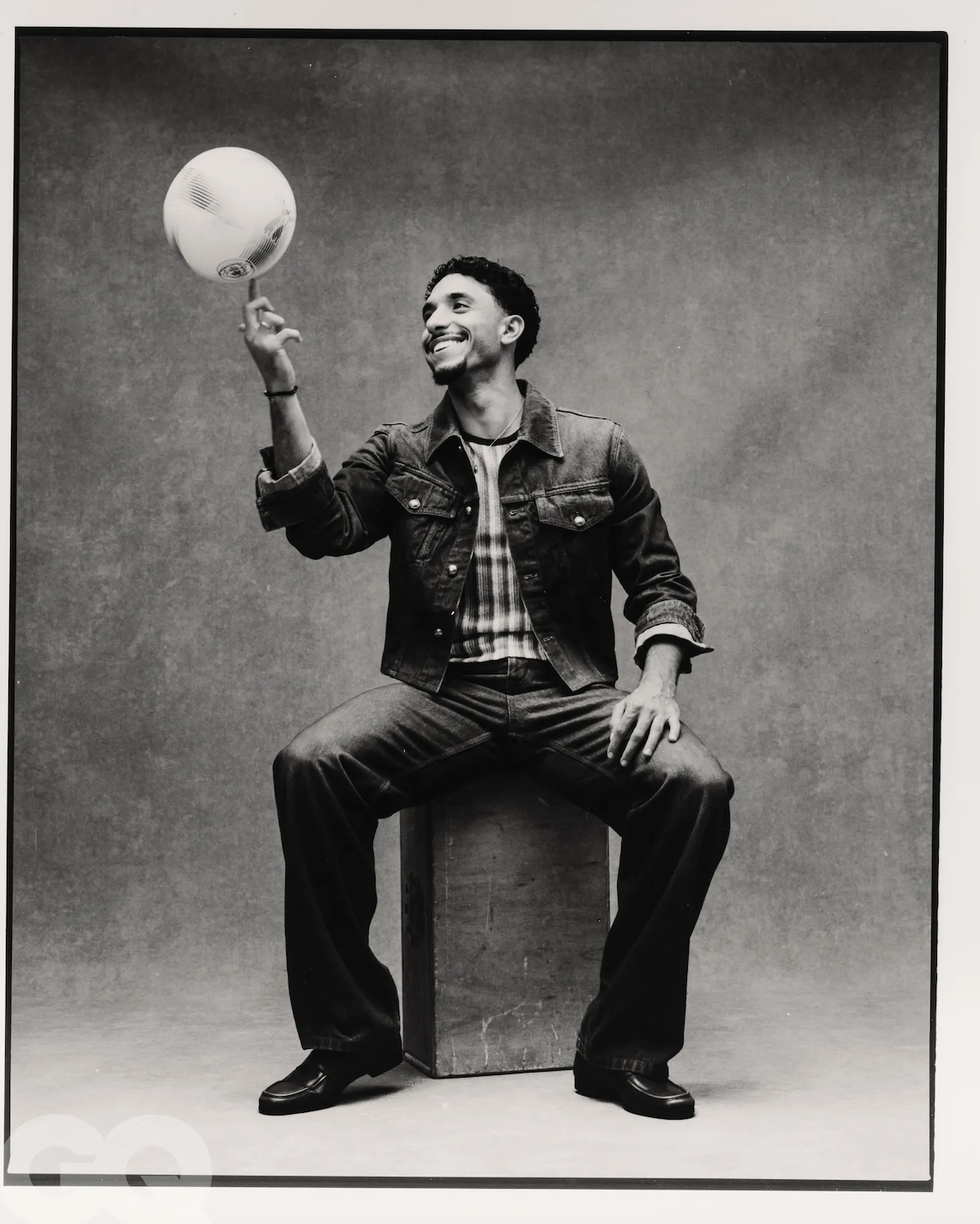
“Newcastle play in an attacking, aggressive style, which means you can sometimes find space between the lines,” he says. “That’s something that I can exploit when I play. But I’d say that, in these games, I started. That gives you a better chance of scoring goals.”
In November 2025, The Athletic wrote about the concept of ‘Haaland Purgatory’, a reference to the struggle attacking players can find at Manchester City when trying to dislodge superstar striker Erling Haaland as the fulcrum of the team’s attack. The article referenced Julián Alvarez, the Argentine who suffered for game time between 2022 and 2024. Alvarez eventually left for Atlético Madrid and is now considered in that elite bracket of big-game starters. It’s the type of situation built to dent confidence and squash dreams if you’re not careful. But Marmoush isn’t fazed. He simply takes any and all competition as fuel for the fire.
“It’s difficult but at the same time it makes you better, knowing that when you’re on the pitch you have to give your best. You have to perform because the next person is there, waiting to take your spot. Small details are vital. Who is willing to put more effort in? Who is willing to work harder and try to prove himself more? This type of competition only makes you better, because if you don’t play you start to think, OK, what can I do to improve as a player?”

It’s a remarkably even-minded opinion for somebody in a sport that can be fraught with an almost instant pressure to perform. Nowhere more so than across social media which, at its worst, can be a hellscape when it comes to in-game appraisal. It’s something that has led to the likes of Marcus Rashford, Bukayo Saka, and Trent Alexander-Arnold stepping back from platforms such as X (formerly Twitter), and away from negativity that often feeds it. Marmoush feels like he’s got a handle on things.
“I think you just need to know how to use it [social media],” he says. “In life you will always have people that speak negatively or positively about you – no matter what you do. As a footballer I don’t really need people to acknowledge whether I was good or bad. I will know this myself already! But the reach and exposure you get through social media is massive, so it’s great to use that to be a good example, and perhaps inspire other people.”
Pressure has always had a certain resonance when it comes to athletes, of course. But it’s often framed as a challenge rather than a problem to be eradicated. When the game is in the balance, are you able to step away from the stress between success and failure and take control? At Manchester City pressure is injected into the mentality.
“My expectations of myself are always the same, but the demands on the pitch are much different here,” says Marmoush. “Frankfurt is a big club, for example, but occasionally we would really celebrate winning a game, because we put so much work into it and sometimes you’re not expected to win against certain teams. At City it’s not about winning today, or scoring some goals, it’s about winning titles. But football is what I love,” he says shrugging off the idea of pressure. “Being on the pitch makes me happy. And the achievement you get when you’re impactful in the game brings a sense of fulfilment – the hard work I put in is paying off. So, you keep going because you always want more. I think if I ever felt too tired to play it’s a sign that the game is over for me. I should do something else instead.”

It’s mid-May and, until last night, Manchester City were still aiming for three trophies this season. After securing a ninth League Cup and fourth FA Cup all roads seemingly led to a final day shoot out for the title between themselves and long-time leaders, Arsenal. At least until an unexpected away draw for Pep’s men at Bournemouth put paid to City’s hopes.
Thankfully it’s also a World Cup year. That biggest of season-enders, signalling a glorious summer of football ahead. You wonder about that famed fan accusation – “He’s saving himself for the World Cup!” – that fires out from the stands and floats up into the air whenever a player is seen to give anything less than one hundred per cent. But while, to supporters, it might seem impossible not to think about representing your country at the ultimate football tournament, Marmoush prefers to concentrate on what’s in front of him. Well, most of the time at least.
“I do occasionally think about how I’m going to the World Cup,” he admits. “But I’m more focused on what’s happening now. You can think about other things all you want, but at the end of the day we want to win the games we’re playing [at Manchester City]. We have to be fully focused on how we can get better each and every day. That way we’ll be in our best form when the World Cup comes around.”
It’s mid-May and, until last night, Manchester City were still aiming for three trophies this season. After securing a ninth League Cup and fourth FA Cup all roads seemingly led to a final day shoot out for the title between themselves and long-time leaders, Arsenal. At least until an unexpected away draw for Pep’s men at Bournemouth put paid to City’s hopes.
Thankfully it’s also a World Cup year. That biggest of season-enders, signalling a glorious summer of football ahead. You wonder about that famed fan accusation – “He’s saving himself for the World Cup!” – that fires out from the stands and floats up into the air whenever a player is seen to give anything less than one hundred per cent. But while, to supporters, it might seem impossible not to think about representing your country at the ultimate football tournament, Marmoush prefers to concentrate on what’s in front of him. Well, most of the time at least.
“I do occasionally think about how I’m going to the World Cup,” he admits. “But I’m more focused on what’s happening now. You can think about other things all you want, but at the end of the day we want to win the games we’re playing [at Manchester City]. We have to be fully focused on how we can get better each and every day. That way we’ll be in our best form when the World Cup comes around.”
When it comes to mentality, there’s certainly been a shift in thinking when it comes to MENA nations appearing at the World Cup Finals in recent years. The 2016 documentary Lights of Rome recounted how the UAE’s own golden generation of players made it all the way to the World Cup Finals in 1990. In it, the UAE coach Carlos Alberto Parreira – something of a legend, who also spent time as coach of Kuwait and Saudi Arabia, as well as Brazil – suggested that qualifying for the World Cup Finals was akin to winning it for a nation like the UAE, such was the disparity in the global football economy. Now, as we await a tournament that features a record nine teams from the MENA region, things have gone way past just making up the numbers.
“I think that the World Cup is a tournament where you can dream to go as far as possible,” says Marmoush with a smile. “We’ve seen recently with Morocco reaching the semifinal in 2022 that anything is possible. After the group stage [Egypt’s includes Belgium, New Zealand, and IR Iran] you just have to take it one game at a time. You have to be realistic, of course. We’re playing against the best national teams in the world, so it’s not easy. But we always dream big. It’s great that we have so many MENA teams at the tournament this year, but it’s not just about the numbers. We want to go there and perform. Here we are, playing on the biggest stage in world football. Let’s show them what we’ve got.”